Lost and Found
The Osborne Road Fountain
The Gordon Cullingham Newsletters were written when he was chairman of the Windsor Local History Group and contain many snippets of his personal research not published elsewhere.
Whilst browsing through these earlier this year I came across this entry, “Osborne Road Fountain. June 27 1888, Portland stone fountain presented by Henri J Henry of Queensmead ( Director of Old Windsor Tapestry manufactory).
Removed in the 1930’s, when the roundabout was built, to Maidenhead Road Nursery. Plans to reconstruct don’t seem to have gone ahead.
My curiosity was aroused as a local historian, and a resident in Osborne Road.
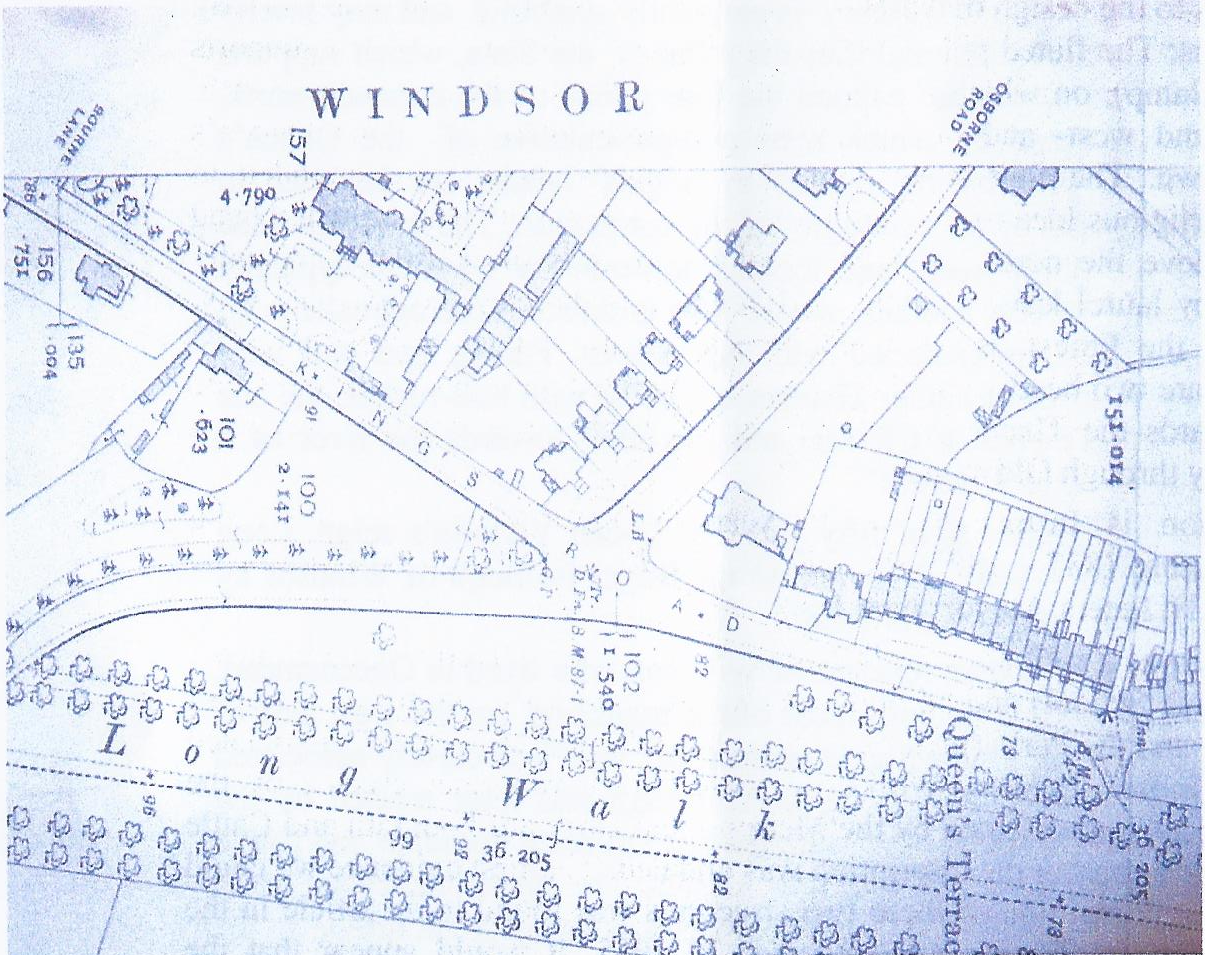
In the copy of the Windsor and Eton Express for June 27 1888, under the heading “The Queen’s Fountain” was the report of the presentation of the fountain to the borough, which stands at the junction of King’s Road with the Osborne and Old Windsor roads (fig 1), handed over by the donor in the presence of numerous spectators.
Although this drinking fountain was designed to celebrate Queen Victoria’s Golden Jubilee, because the Court was in mourning at the death of the Emperor Frederick of Germany, there was no public ceremony and no member of the Royal Family was present.
Upon the arrival of the Mayor, the water was turned on and Mr Henry passed to His Worship the first cup of water. The appliances for the supply of water to the fountain, and of gas to the lamp surmounting it, were then inspected, the water partaken of by one or two members of the Corporation, and the proceedings were at an end.
However the newspaper did not include a photo or a sketch of the fountain.
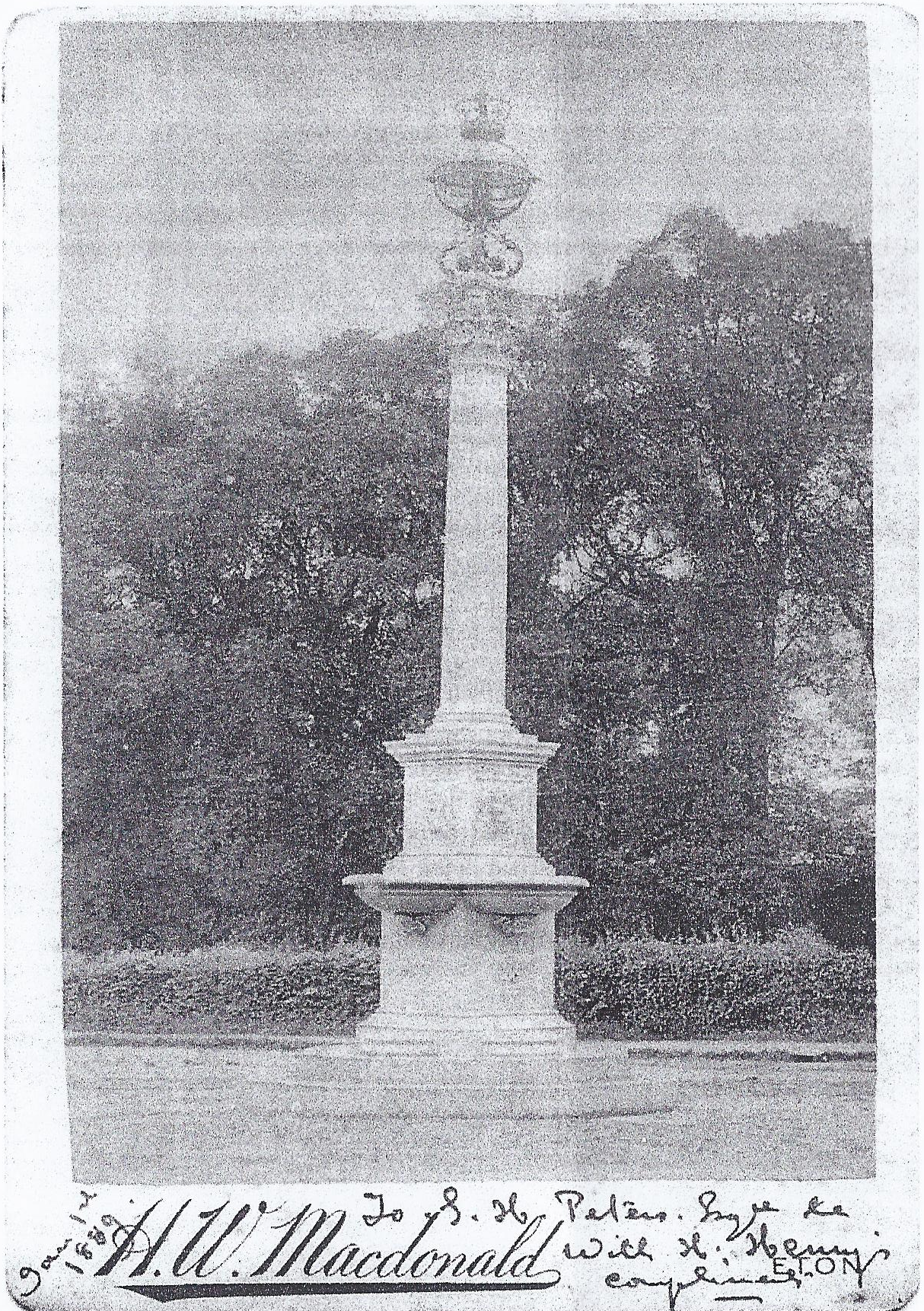
Fortunately after many searches a photograph was eventually found in the Windsor and Borough Museum Store ( see fig 2.) with the date, January 1st 1889 and the writing shows it was a presentation to G.H. Peters (the mayor at the presentation) and signed by H.Henry the donor of the fountain.
The photograph is reproduced here by kind permission of the museum.
Mr H. Henry was a well known resident of Windsor, who lived in Queensmead, (now Brigidine School*) and he built most of the mansions on the west side of Kings Road and the Park (including Queensmead), and was closely associated with Old Windsor Tapestry Works.
*Brigidine school is now Queensmead House School.
A horse trough was later erected by the fountain which was presented by the Metropolitan Drinking Fountain and Cattle Trough Association but the inscription was undated.
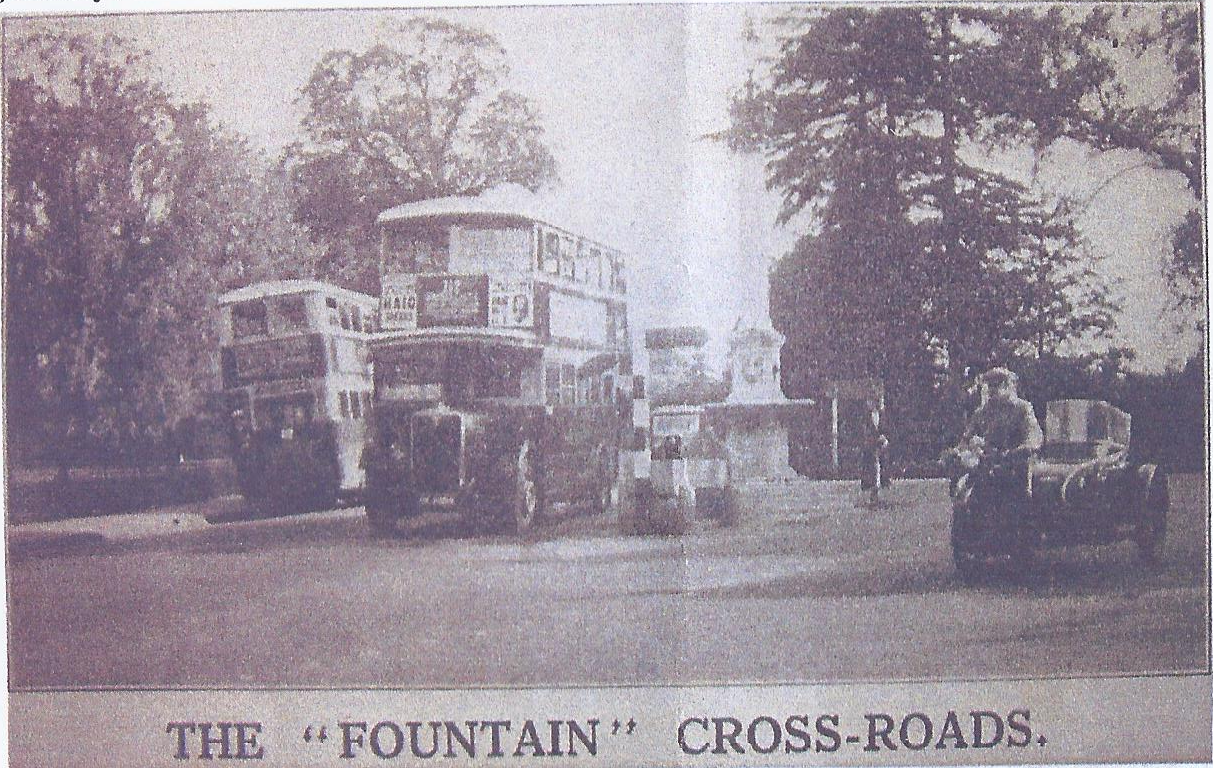
The first evidence we could find about the demolition of these two structures was found in an article in the Windsor and Eton Express in September 20 1935. It would appear that the growth of motor traffic was causing problems at the ‘Fountain’ crossroads.
A photograph was included to illustrate the problem (see Fig 3.). The report goes on to say that a scheme had already been outlined to alter the road junction and to install traffic lights at a cost of £730. This would involve the removal of the horse trough and fountain.
Opinion was divided as to whether this would improve matters or make traffic conditions more difficult. In the edition of the paper for the 10th of June 1938 details were given of a crash at the Fountain crossroads involving a charabanc returning from the Aldershot Tattoo and the Windsor Fire Brigade tender, which demolished the horse trough. Two Firemen were taken to hospital and the thirty children in the charabanc although shaken, were able to continue their journey.
In the report of a Council meeting in the paper’s edition of March 17th 1939 we read that the Borough had been authorised to arrange for the removal of the monument and the question was raised regarding the considering of where it could be erected as many people disliked the removal.
The rubble was taken to the Maidenhead Road Nursery which was closed in the 1970s and houses were built on the site, bringing to an end any possibility of reconstruction.
My thanks to Pamela Marsden, Sue Ashley and Martin Kelaita for their help in the preparation of this article.
Norman Oxley
Sources:
Windsor and Eton Express
The Windsor and Borough Museum Collection